Your POS knows who your most valuable customer is. You probably can't name them.
Most courses have three types of golfers but can only identify one. The data to find the other two already exists — it's just stuck in three different systems.
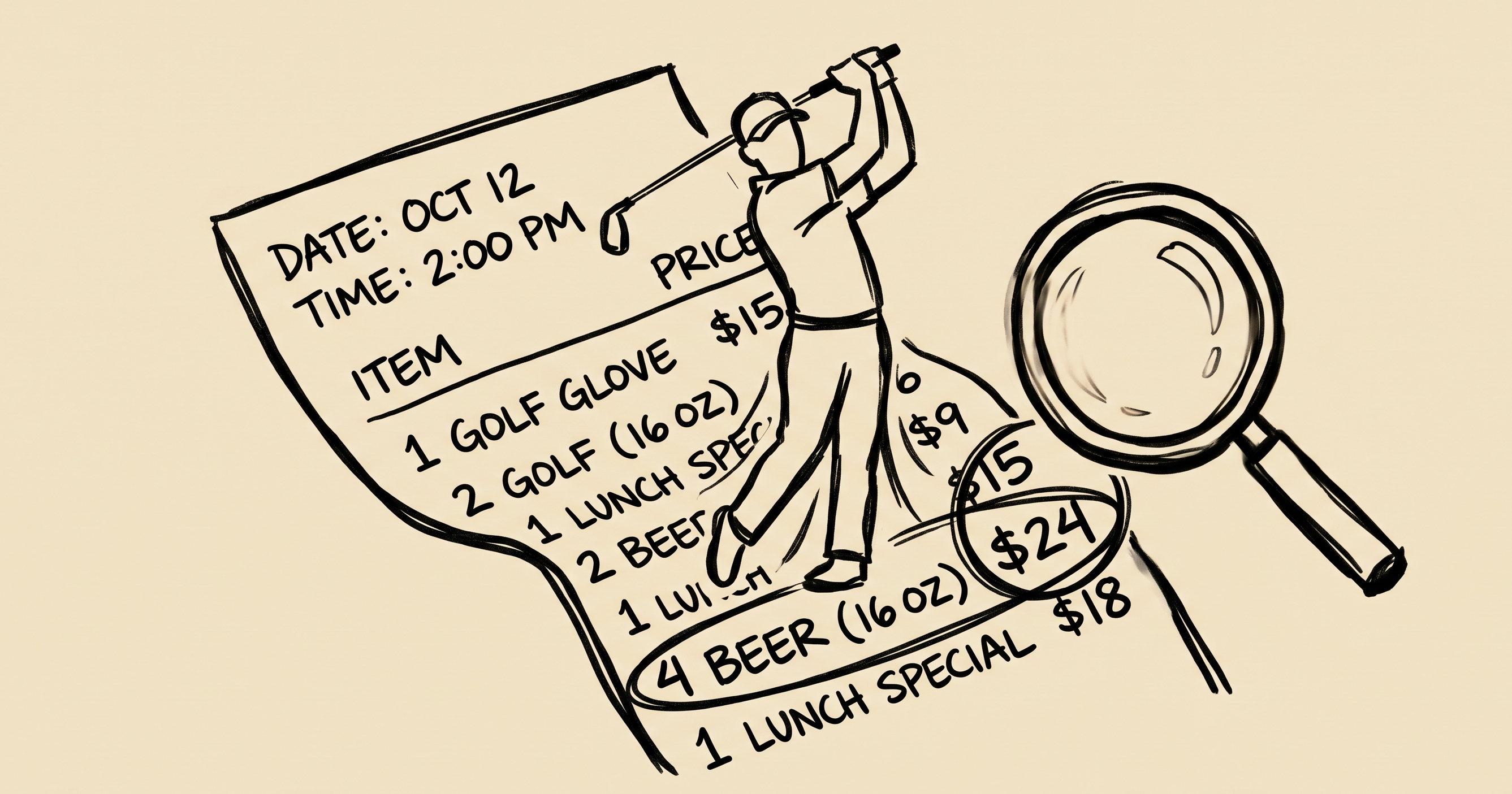
Ask a course operator who their best customers are. They’ll rattle off four or five names without blinking — the regulars who show up every Tuesday, tip the cart staff, and buy a sleeve of balls on the way out. They know these people by sight.
Ask who their second-best customers are — the seasonal players who came eight times last summer and haven’t been back since October — and you’ll get a pause, a shrug, and something like: “We’d have to pull the tee sheet.”
That pause is costing you rounds.
The three types of golfers at every course
Every course has the same basic player breakdown, even if nobody has mapped it out explicitly:
- Frequent players — they’re in the book twice a week, they know the staff, and they’d notice if you changed the coffee brand. You already know who they are.
- Seasonal regulars — they played 6–12 times last year, mostly in a concentrated window. They like your course. They just went quiet.
- One-and-done visitors — they came once, maybe for a work outing or a trip. Some were disappointed; most were fine. A small slice would come back if reminded.
The frequent players run themselves. The one-and-done visitors are expensive to convert. The seasonal regulars are where the real growth is — they’ve already decided they like your course, they just haven’t been nudged back.
The problem is identifying them before October becomes March.
The data exists. It’s just in three different places.
Your POS has transaction history. Your tee sheet has booking frequency and group size. Your email tool has open rates and click-through patterns. None of these systems talk to each other by default.
So answering a question like “who played four or more times between May and September and hasn’t booked since” requires exporting CSVs from at least two systems, cross-referencing them in a spreadsheet, cleaning the date formats, and then figuring out how to filter it into something actionable. On a good day that’s 45 minutes of work for someone who knows what they’re doing. Most operators don’t have that person — or that Saturday morning.
The result is that marketing blasts go to the whole list. Everyone gets the same email. The frequent players don’t need it. The one-and-dones aren’t coming back regardless. And the seasonal regulars — your actual target — get the same generic “we miss you” as everyone else, which is to say they get nothing useful.
What it costs to not know
Research from Bain & Company, published in Harvard Business Review, found that a 5% increase in customer retention can lift profits by 25–95%, depending on industry. Acquiring a new golfer costs you 5–25 times what it costs to bring back one who’s already played your course.
The National Golf Foundation put a specific number on the recognition gap: a third of golfers say the staff at the courses they play most often don’t know their name. That’s not a hospitality problem — it’s a data problem. The staff don’t know because the system doesn’t tell them.
In that same NGF study, 50% of golf executives admitted the industry lags behind other sectors in customer engagement and retention. The courses that close that gap don’t do it by hiring more staff. They do it by making their existing data queryable.
Why segmenting feels impossible
The frustration isn’t that operators don’t care about retention. Most do. The frustration is that acting on it requires a workflow nobody has built.
Segmenting your list into “frequent,” “seasonal,” and “lapsed” buckets means someone has to define what those buckets are, build the query, pull the data, format the output, and hand it to someone who can write a campaign. At most courses, that chain breaks somewhere around step two.
So the list stays unsegmented. The campaigns stay generic. And the seasonal regulars who played eight times last May go into next spring without ever hearing from you — until they’ve already booked somewhere else.
Win-back campaigns aimed at lapsed customers consistently deliver 10–30% reactivation rates, with over 70% of marketers rating them the best-ROI tactic in their mix. That’s not a small number. A course with 500 seasonal regulars who’ve gone quiet could realistically bring back 50–150 of them with the right message at the right time. At $65 a round for a foursome, the math moves fast.
What to do on Monday
These are the five questions you should be able to answer without a spreadsheet by Friday. If any of them require more than two minutes to pull, that’s the gap to close:
- Who played 4+ times last summer (June–August) and hasn’t booked since October? These are your top win-back targets.
- Who has the highest average spend per visit in the past 12 months? This is your VIP list — do they know you think of them that way?
- Which customers brought a new player to your course in the last year? These are your referral engines. They’re worth a personal thank-you.
- Who booked as a single or pair but paid for a foursome slot? They might be looking for a regular group — or open to a membership conversation.
- Who hasn’t played in 60 days but came in at least three times before that? This is your re-engagement window before “seasonal” becomes “churned.”
If you can answer all five with data you trust, you’re ahead of most courses. If you’re guessing on more than two, you have a data infrastructure problem — not a marketing problem.
The Fairwai angle
Fairwai connects your booking, POS, and communication data into one layer you can ask questions in plain English. Type “show me golfers who played 4+ times last summer and haven’t booked since” and you get the list — not a task for next weekend. From there, Fairwai drafts a re-engagement campaign targeted to that specific segment, personalized by visit history, and ready to send. The whole loop — from question to scheduled campaign — takes less time than it takes to export a CSV.
The seasonal regulars are already in your database. They just need someone to notice they’ve gone quiet.
If you want to see what your current lapse picture looks like, hello@fairwai.co is a fast place to start.